
Use daily moments
Choose routines – morning greetings, mealtimes, bedtime – to always include Igbo phrases.
IgboLearn gives parents simple tools – games, daily words, and examples – to bring Igbo into family life in a gentle, consistent way.
PARENT‑FRIENDLY STEPS
You don’t need a full curriculum. Small, repeatable actions add up over time.
Choose routines – morning greetings, mealtimes, bedtime – to always include Igbo phrases.

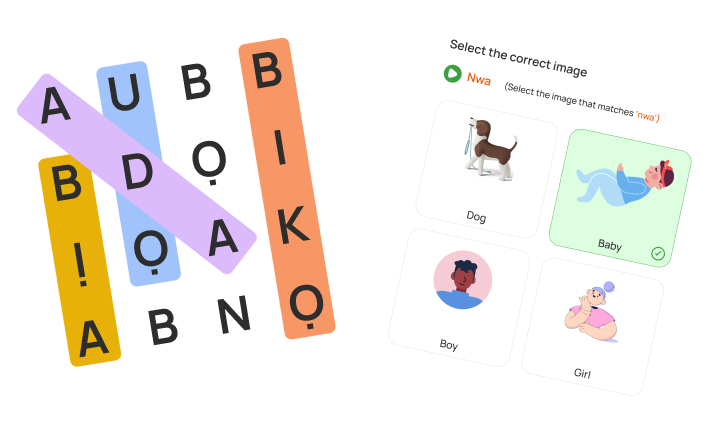
Let children interact with Igbo through crosswords, spin‑the‑wheel, and picture matching in the app.
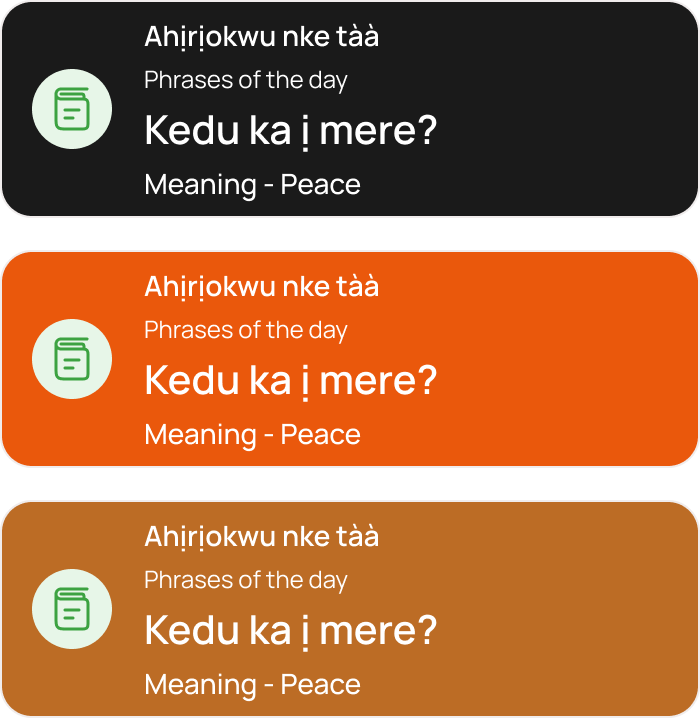
Pick an Igbo word of the day and challenge everyone at home to use it at least once.
USING IGBOLEARN
Think of the app as a helper – you’re still the main teacher, but you don’t have to do it alone.
WHAT ACTUALLY WORKS
Most families do not fail at this for lack of effort. They fail because Igbo gets scheduled as a lesson, and lessons compete with everything else in a child's day. Attaching it to things that already happen works better.
Greetings at breakfast, counting on the stairs, colours in the car. Ten seconds inside an existing habit survives a busy week; a thirty-minute Saturday lesson does not.
Children disengage when a parent is testing them and stay interested when a parent is also getting things wrong. If your own Igbo is rusty, say so and learn together — it helps rather than hurts.
Correct tone and pronunciation gently and sparingly. A child who is corrected constantly stops volunteering, and a child who stops speaking stops learning.
A video call with a grandparent does more for motivation than any curriculum. Children learn what is useful to them, and being understood by someone they love is very useful.
Igbo is tonal, and a child copying a written word without hearing it will learn it wrong. Native audio matters more here than in English or French.
Short puzzles hold attention far longer than vocabulary drills. See Igbo word games and puzzles.
BY AGE
Sounds and tone are absorbed effortlessly at this age, in a way that gets harder later. Do not worry about vocabulary counts — exposure is the whole job.
Games, songs, and short rounds work; formal lessons rarely do. This is also when children start refusing to speak a language their friends do not — expect it and keep it light.

Identity motivates more than instruction. Heritage, music, and family history give a teenager a reason; being told to practise generally does not. See Igbo heritage.
Download IgboLearn, choose one simple habit, and let your family grow into the language together.